
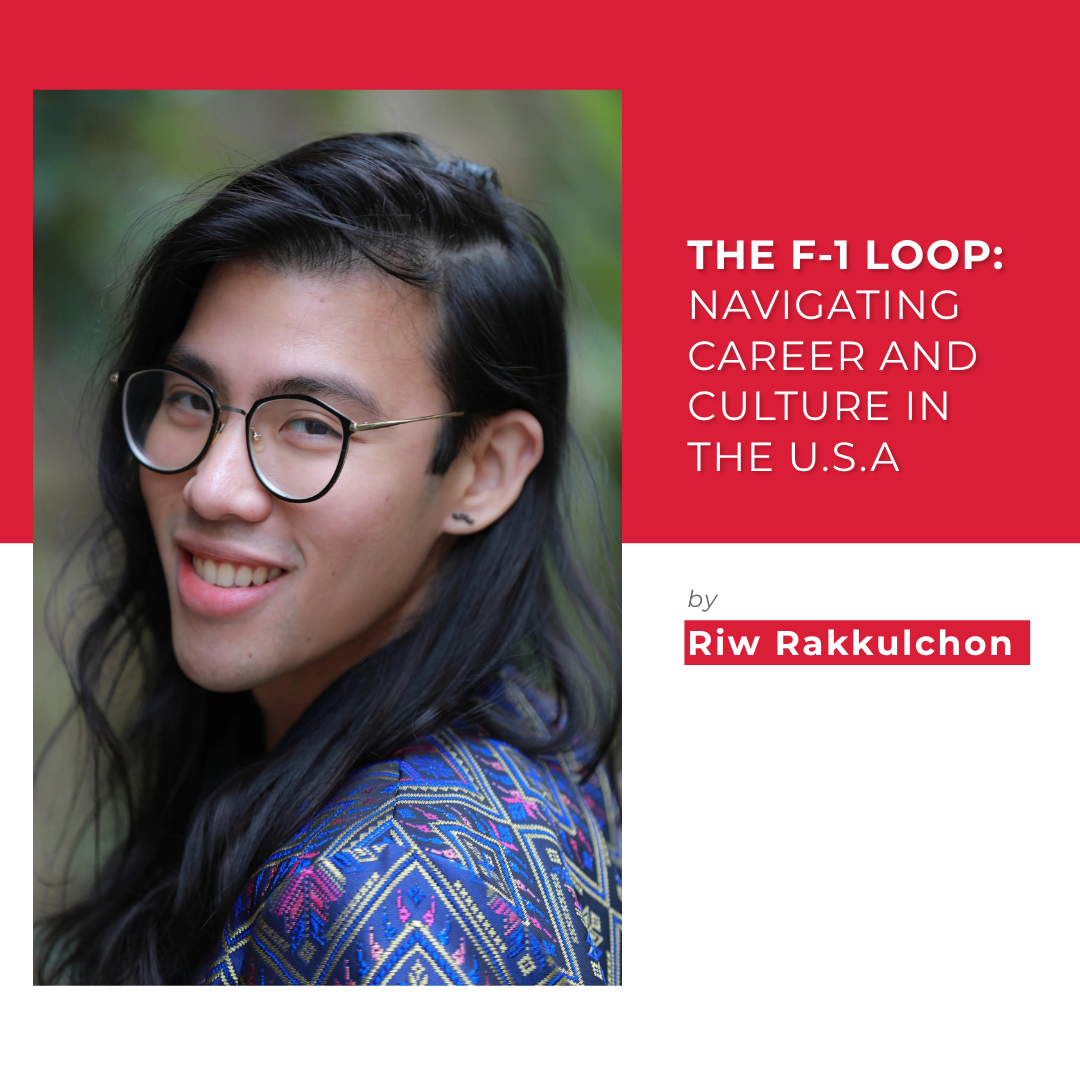
A reckoning was upon me. My status as an immigrant, my career trajectory, and my sense of purpose had shifted while bringing me back to some persistent questions: Why do I do this? Who am I doing this for? And, at times, the uncomfortable question: Does it matter to anyone beyond myself?
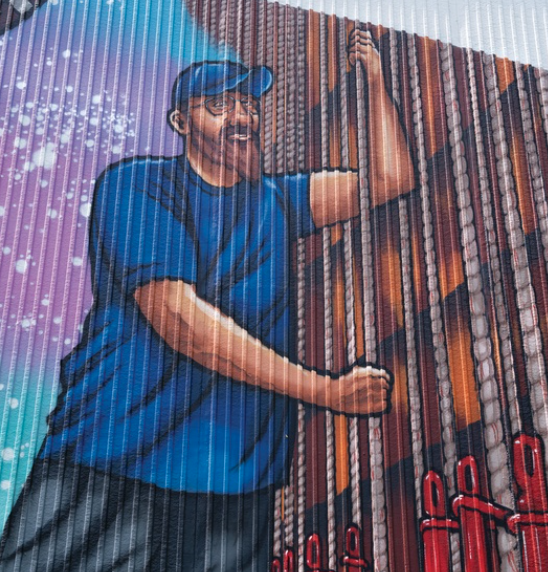
I found myself considering this while moving from one theatre to another — leaving the opening of the award-winning run of Mexodus (the loop musical by Brian Quijada and Nygel D. Robinson, directed by David Mendizábal) and heading directly into tech for English by Sanaz Toossi at Indiana Repertory Theatre. The in-between spaces of travel — airports, buses, hotel rooms — provided a rare stillness that allowed me to reflect, not only on where I was going, but on where these questions first began. It felt like a looping back through time: revisiting earlier versions of myself, earlier crossings, earlier uncertainties that first gave shape to my sense of ambition, fear, and ultimately, belonging.
In that reflection, I thought about the privilege of building work around stories that resonate so closely with both the present moment and my own lived experience. Every journey across the United States now as an artist working under an O-1 visa (a designation for individuals with extraordinary ability or achievement), carries an ever present anxiety. Encounters with immigration enforcement at airports, news of detentions, the continual emergence of new restrictions, and the awareness that one’s appearance alone can alter how one is perceived — all of it accumulates over time, settling into the body in ways that are difficult to fully name.
My journey truly began during the undergraduate application process from Bangkok, Thailand. I knew I needed to study theatre somewhere beyond Thailand, where the theatre community felt small and deeply insular. More importantly, we lacked freedom of speech. In my view, theatre is fundamentally about the exchange of ideas — about questioning, challenging, and imagining new possibilities. How can an art form grow if its voices are constrained? Why would I choose a path where my own voice could be suppressed?
Applying to schools in the United States felt overwhelming from the very beginning. I spent countless nights awake at one in the morning for interviews over Skype — long before screen sharing or Zoom became commonplace — speaking into grainy webcams with cameras sometimes turned off entirely because of unstable internet connections. The process was far more daunting than I had anticipated. My first rejection letters all pointed to the same issue: my TOEFL (Test of English as a Foreign Language) scores were too low.
Fortunately, I was accepted into the Department of Theatre Arts at Ithaca College as a costume design student. At the time, I convinced myself that Ithaca was “close enough” to New York City. Looking back, the thought feels almost comical.
Traveling alone to the United States with only two suitcases was its own kind of initiation. I landed at JFK Airport after 22 hours in the air completely overwhelmed, trying to navigate the shuttle to Port Authority before finding the correct bus for the five-hour journey to Ithaca. The maze of terminals, signs, and unfamiliar systems felt endless. I still remember the panic I must have had written all over my face, because a stranger on their way to Cornell University noticed and pointed me in the right direction. That small act of kindness stayed with me.
After the long journey to Ithaca I thought the worst was behind me. I arrived in the United States on an F-1 student student visa, eager and ready to learn.The academic work itself was never the hardest part of being an international student - it was the culture shock.
During orientation, the international student group was introduced to the concept by Dr. Sue-Je Gage, who later became my anthropology professor when I briefly considered pursuing a minor in anthropology within Ithaca College’s liberal arts program. She described culture shock as a psychological disorientation and anxiety that emerges when someone attempts to immerse themselves in an unfamiliar language, environment, or way of life. At the time, I did not think much of it. Why would anyone treat me differently? I was only human.
Over the years, certain phrases began to repeat themselves: “Your English is very good.” “You don’t have an accent.” “Oh, he’s from Bangkok — he doesn’t know.” As an aside, I often forget that I speak at least one more language than most people around me. Still, you learn to bottle things up and move through the day. After all, I was there to learn and to become the best designer I could be. And in many ways, I did learn. Throughout my years at school, I discovered my love for scenic design. I found myself drawn to art history and the stories embedded within. I began to understand my strengths, confront my weaknesses, and recognize the areas where I still needed to grow.
It would not be until the fall of 2011 that I returned to New York City through a course on New York performance spaces. During that trip, I saw my first Broadway show, Follies, starring Bernadette Peters. I watched a dance performance at BAM’s Harvey Theater, experienced Nabucco at the Metropolitan Opera, and listened to a jazz set at Birdland. Something shifted in me during that visit. I realized, perhaps for the first time, that I wanted to design for spaces like those — for rooms capable of holding that kind of artistic scale, ambition, and possibility.
I grabbed every opportunity I could - creating props for student shows, designing projections for shows in lecture halls which proved to be an overkill, but still an opportunity. I snuck into the costume storage to pull clothes for shows, designed sets for Pippin at Cornell University, which was nearby. I rifled through scrap wood from the scene shop to create scenic gestures. During the summers of my sophomore and junior year I attended Williamstown Theatre Festival as a props intern, then a scenic intern the following year. There I met marvelous designers such as Wilson Chin,
Mikko Suzuki-Macadams, Dane Laffrey, Michael Yeargan, Derek McLane, and more. During the 4 year period at school I was also given the opportunity to study abroad in London. At first I thought to myself “I’m already studying abroad, why go yet to another country?”. For us immigrants we would have to go through another immigration process to be able to study in the UK, but after much consideration, I took the opportunity. The second culture shock was not as severe. Perhaps it was the tough exterior I have created from past experiences that reduced the shock? As my time at Ithaca came to an end, designed 2 shows for the department MainStage productions - The Civilian’s Gone Missing, and Mark Adamo’s Little Women Opera. I thought that maybe I had seen all the U.S. had in store for me and maybe it was time to pack my things and head home. What would I do after graduation? Should I go home and try to work in theaters available in Thailand? Should I apply for grad school and continue school? I decided to apply for the Optional Practical Training (OPT), a temporary, off campus work authorization for international students to gain practical work experience in their area of study for up to one year. Because I had made it through 4 years of hard labor and minimum wage work study pay, I might as well keep striving.
During my OPT year in New York, I was incredibly fortunate to reconnect with many people I had met throughout my undergraduate years. The first two productions I worked on were at FringeNYC: Loose Cannon by Gabriel Vega Weissman — a fellow Williamstown alum — and Brian Reno and directed by Logan Reed. The second was Far From Canterbury by Danny K. Bernstein, directed by Juliana Kleist-Mendez. I was building set pieces for both productions out of my apartment, hauling lumber on the subway system after my trips to the hardware store. I admit, the close quarters made some commuters the accidental recipients of a splinter or two.
At the same time, I was emailing every designer I had met at Williamstown, asking if they needed an assistant. One of those emails reached Wilson Chin, who was looking for someone to build a model for Cleveland Play House’s production of The Mountaintop by Katori Hall, directed by Carl Cofield. What began as a single week of work eventually grew into an assistantship and friendship that would last nearly a decade. When work became overwhelming, I would come home and bake desserts, finding a sense of calm and grounding in the process - I called myself a “stress baker”,often bringing the baked goods into tech rehearsals to share with the team.
That OPT year became a balancing act between multiple studios and projects. I worked overnight carrying a model from NYC to LA through Jason Ardizzone-West’s studio for Es Devlin’s Queen Bee project, helped fabricate fashion show environments through Andrew Boyce’s studio, and apprenticed with Walt Spangler on productions including Hold On to Me Darling, The Roar of the Greasepaint…, Margaritaville, and Tuck Everlasting. I was thrilled just to be inside a studio working on a Broadway production. Walt and I would often travel together to PRG for scenic shop check-ins before heading back to his Brooklyn studio, and during those drives he once casually asked, “Have you thought about grad school?”
I shrugged and said, “I don’t know.” In truth, I was wrestling with questions that felt much larger than graduate school itself: Do I really need more schooling? Am I failing as an apprentice? What does a future in America hold for me?
These wonderings stayed with me, but it was Walt’s one question about grad school that ultimately pushed me to apply to the Yale School of Drama — now the David Geffen School of Drama at Yale. Years later, Walt admitted he had only been making conversation - a conversation that opened a door in my mind. Yale became the next chapter of my life.
So, it was time for another TOEFL test for an application, fees, and a portfolio review. I interviewed on the coveted Ming Cho Lee’s Saturday class session. Sitting across from Ming and Michael as I presented my portfolio was daunting. It was the worst fear of having your Asian elder look through your soul and seeing your flaws through your work. A few moments passed as Michael Yeargan told me to wait in the hallway as they deliberate. I was accepted on the spot. This was a pivotal moment for me, since I had applied to NYU Tisch during my final year of undergrad and was rejected almost immediately. Thus began the loop back on the F-1 train as a student at Yale.
During my time at Yale, I believed the graduate school experience would feel different. I imagined a community built around a shared purpose: individual growth, artistic rigor, and mutual support. Regrettably, the culture shock I had experienced years earlier returned with new intensity. For the first time, I could feel a broader shift happening in the political and social landscape of the United States in the aftermath of Brexit and rising nationalism around the world.
One of the most vivid moments from my time in school occurred during the August Wilson project, when Constanza Romero joined us as a guest mentor. During a class discussion, a classmate from Taiwan admitted, “I do not understand Black culture, so I don’t think I can design this piece.” The comment opened a conversation I had not anticipated, and suddenly the feeling of culture shock resurfaced for me.
I thought back to my own time in Ithaca, when I tried so hard to assimilate that I began losing parts of my sense of self along the way. That class became an important learning moment — not only about theatre, but about empathy and storytelling itself. I realized that theatre, even through design, has the power to foster cross-cultural understanding. At its core, it is an art form rooted in human stories and human connection. We do not need to share the same background to engage with a culture different from our own; we only need the willingness to approach the work with care, respect, and curiosity.
As a student, I decided that the best thing I could do was focus on the areas where I could genuinely contribute and be of service. Rather than retreat inward, I tried to become more deeply involved in the greater Yale community. Through that involvement, I met Andrew Dowe, the former Associate Director of the Yale Office of LGBTQ Resources. Andrew knew I was a stress baker and saw an opportunity for me to give back through food and community building. He invited me to cook “Queer Brunch” once a month as a way to bring people together.
Waking up at four in the morning to cook themed meals in the office kitchen quickly became one of the great joys of my time at Yale. Those mornings reminded me that care itself could be a form of artistry and community work. I also joined student government as a representative for the School of Drama and eventually became co chair of the Graduate Student Assembly’s Social Committee. In that role, I helped organize events for graduate students across the university — from wellness and community-building initiatives to conversations with advocates and organizers from around the country. At the same time, I was maxing out my work-study hours to help offset the cost of attending Yale, as tuition was not yet free. I spent several hours working in the kitchen at the Yale Cabaret, a student-run dinner theatre, where I worked as a prep chef through a work-study position. In addition, I served as an usher and took on various odd jobs across different departments at school whenever needed.
Toward the end of my second year, interviews began for the upcoming Yale Repertory Theatre season. By a stroke of luck — or perhaps fate — one of the opportunities was Twelfth Night, directed by Carl Cofield. The moment felt almost beshert because years earlier, I had assisted on a production designed for Carl, and now I was being invited into direct collaboration with him. I later learned that the last Thai scenic design student at Yale to design for Yale Rep had done so in the 1990s, and that production had also been Shakespeare’s Twelfth Night.
I distinctly remember where I was when I received the offer email. I was sitting beside my mother in the pews of the Cathedral of St. John the Divine during my sister’s graduation ceremony. My phone buzzed. I read the email. My mother looked over at me and said, “You make me so proud.” That day, she had two reasons to cry tears of joy.
My collaboration with Carl led to future opportunities together at The Old Globe, The Public Theater — on a production staged inside the Cathedral of St. John the Divine — and Classical Theatre of Harlem after graduation. When I completed my degree, another OPT opportunity brought me back to New York City, where I continued assisting designers I had met through both school and professional life, including Jason Ardizzone-West, Riccardo Hernandez, and Wilson Chin.
For a while, the growth felt constant, as though the path ahead was finally beginning to open. Then came the shutdown of 2020.
As the pandemic brought the theatre industry to a halt, I was fortunate to continue working through a number of Zoom-based theatrical productions. For many of these projects, I found myself running across the city in a KN95 mask, gathering costume pieces and props that would appear on screens instead of stages. It was an unusual and isolating time, but theatre persisted in whatever ways it could.
I was also deeply grateful for the support of the See Lighting Foundation, led by Cha See, Kimie Nishikawa, and Rodrigo Muñoz. Their micro-grants provided critical relief to immigrant artists who did not qualify for government assistance. During that period, I had to remain determined and fiercely self-sufficient. The skills I had developed working as a chef became unexpectedly essential; they taught me how to stretch groceries for weeks at a time. Potatoes, carrots, canned goods, onions, and all purpose flour became staples of survival. Even then, eating only once a day was often a necessity. At the time, I believed self-reliance was the key to surviving hardship. It was not until much later that I realized community was just as essential.
Despite the isolation of the pandemic, I stayed connected to the theatre community. I joined the Wingspace Theatrical Design Collective and began building relationships with other international artists who were navigating many of the same uncertainties and fears. Through those conversations and collaborations, I experienced something I had been missing for a long time: hope. It reminded me that theatre is not only about performance or production, but about human connection — the ability to find one another, even in moments of distance and uncertainty.
It was not until the world began to reopen that I was able to re-enter theatrical spaces in a sustained way. During that transitional period, I took the United Scenic Artists Local 829 union exam, formally entering the professional landscape of theatrical design and production. My first project under a union contract was a filmed production of Master Harold… and the Boys by Athol Fugard, directed by Gilbert McCauley at Syracuse Stage. The process itself reflected the hybrid conditions of the time: while the production was staged and captured theatrically, key collaborators — including the costume and sound designers — remained connected remotely via Zoom. Concurrently, I served as lead associate for Wilson Chin and Clint Ramos on several major productions, including The Taming of the Shrew, directed by Shana Cooper at The Old Globe, and Long Day’s Journey Into Night, directed by Robert O’Hara at Minetta Lane Theatre (Audible). During this period I received my first Broadway associate scenic design credit on Pass Over by Antoinette Nwandu, directed by Danya Taymor and designed by Wilson Chin. Alongside these collaborations, I continued to take on independent projects that gradually afforded me a more direct voice within my practice.
Working independently, however, has never been simple. There were many moments when I considered stepping away entirely and starting over. But the question of what it means to “start over” is not easily resolved. There is no clean separation from the years of labor, uncertainty, sacrifice, and discovery that have shaped my practice; they remain embedded in the work itself, inseparable from it.
Looking back, I understand more clearly that my trajectory has never been linear. It has been a loop — returning, revising, and re-encountering the same questions from new positions, each time with a deeper sense of perspective.
I returned to spaces where I had once been an assistant, this time stepping into leadership roles as a designer. I found myself back at BAM’s Harvey Theater designing Huang Ruo’s Angel Island, directed by Matthew Ozawa. I returned to The Old Globe to design The XIXth, directed by Carl Cofield. I looped back once more to the Minetta
Lane Theatre with Mexodus. Each return carried the memory of earlier versions of myself — the student, the assistant, the immigrant artist trying to find footing in unfamiliar rooms.
A line from Mexodus continues to stay with me: Todos estamos juntos en esto. We are all in this together. The longer I work in theatre, the more I understand that no artistic career is built alone. After all, theatre is a practice rooted in shared space, and experiences. Every person I have encountered throughout this journey — teachers, collaborators, mentors, classmates, stagehands, fellow immigrants, friends — has shaped my growth as both an artist and a human being. I would not be where I am without the communities that welcomed me into these spaces, challenged me, nourished me, and reminded me that I belonged even when I doubted it myself.
Stories reveal more about us than we often realize. I believe every person who enters the theatre carries with them a distinct history, identity, and way of seeing the world, and that those perspectives are invaluable. Theatre becomes meaningful precisely because it is collective. It asks us to listen across differences, to imagine beyond ourselves, and to recognize our shared humanity within the lives of others.
We cannot sustain this work alone. But through community — through care, collaboration, and the willingness to stand beside one another — we ensure that important stories continue to be told and that they remain woven into the larger tapestry of this country.
To every F-1 student and every immigrant artist trying to navigate uncertainty, isolation, or fear: I stand with you. If you have ever felt discouraged, unseen, or alone, know that others have walked this path beside you and will continue to do so.
Todos estamos juntos en esto.


Support USITT
For many 501(c)3 nonprofit organizations, USITT included, donations are a lifeline. We are able to continue to expand our online offerings to our Members and to our industry thanks to Membership dollars and the generosity of our donors.